When opening your electric bill or checking your daily pay-as-you-go balance in Texas, seeing separate line items for infrastructure can feel confusing. Many Texas homeowners, renters, and newly arrived residents wonder why two distinct entities seem to touch their electric service. To make sense of your energy spending, it is essential to look at how the Texas power grid separates the physical transmission of electricity from customer billing and account administration.
Tracking Billing Entities vs. Wire Managers in Texas
The deregulated marketplace overseen by the Public Utility Commission of Texas (PUCT) operates on a two-tier system designed to encourage fair competition while maintaining safe, reliable infrastructure. Understanding who does what makes managing your daily balance simple and predictable.
The Transmission and Distribution Service Provider (TDSP)
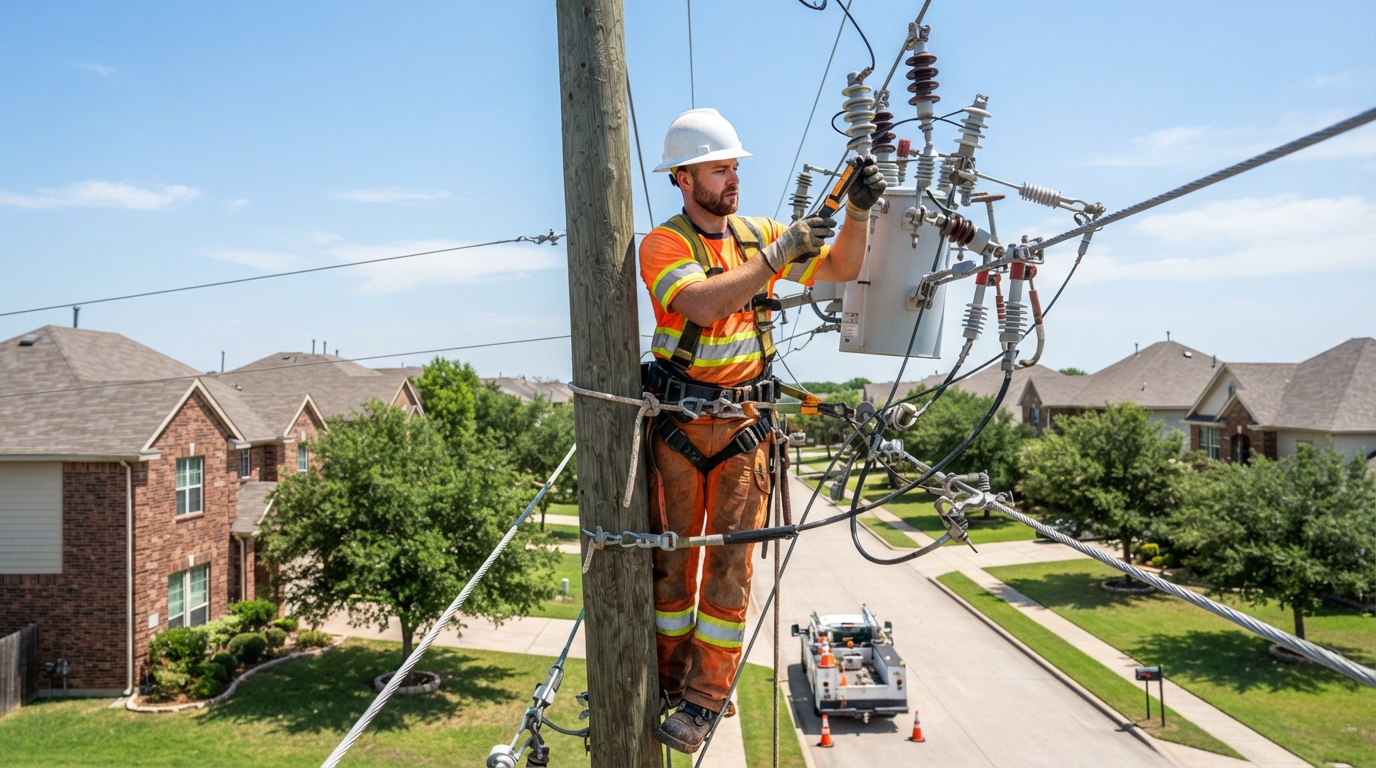
Your regional TDSP—often referred to as the utility line company or wire manager—owns, maintains, and operates the physical grid infrastructure. In the greater Houston footprint, this utility company is CenterPoint Energy, whereas North Texas is primarily served by Oncor. Regardless of who sends your daily account notifications, these regulated entities physically handle:
- Responding to fallen power lines, hardware failures, and storm outages.
- Installing, upgrading, and reading digital smart meters.
- Maintaining transmission towers, poles, and neighborhood transformers.
Because these utilities maintain public safety and regional infrastructure, their delivery fees are non-bypassable and regulated by state authorities. Whether you live in an urban core or require local residential service like electricity Abilene households or electricity Midland residents rely on, your regional TDSP remains responsible for physical power delivery.
The Retail Electric Provider (REP)
Your REP is the customer-facing company that purchases wholesale power, manages your billing, and provides account support. While commercial entities search for specialized commercial agreements from business power companies, residential customers choose a retail plan that fits their daily budgeting preferences. Your REP handles financial accounting, while the wire manager ensures electricity flows smoothly to your front door.
Unpacking Centerpoint Energy TDSP Pass Through Charges
If you live in CenterPoint’s service territory, mandatory delivery fees appear on your breakdown regardless of which retail company manages your billing. Understanding Houston apartment prepaid energy rates or traditional residential plans requires recognizing that centerpoint energy tdsp pass through charges consist of two core components:
- Fixed Monthly Customer Charges: Standard, flat monthly administrative fees assessed by the transmission utility to maintain meter connections and local customer account infrastructure.
- Volumetric Distribution Charges: Variable per-kilowatt-hour charges tied directly to the amount of power consumed, funding ongoing hardware updates and grid expansion across the region.
Because these costs are established by state regulatory filings, your retail supplier simply passes them through at cost with zero markup. Whether you enroll in a traditional long-term contract or choose a flexible prepaid electricity plan, the underlying delivery charges assessed by CenterPoint remain identical.
The Power of Electric Choice in Texas
While regional delivery utilities are assigned based on geographic territory, Texas consumer freedom gives individual households full control over their retail energy relationship. Under the state’s power to choose, you are never locked into dealing with rigid credit checks, restrictive billing policies, or massive security deposits from traditional retail brands.
Straightforward Energy Management with Prepaid Electric Service
At Prepaid Electric Service, we bring complete transparency and personal control back to Texas households. With 20 years of experience keeping the lights on for hardworking Texans, we ensure that managing your power fits your real-world lifestyle—even when unexpected health or job issues impact traditional credit metrics. Our core identity is simple: Electricity with no deposit and no credit check! Everyone is approved!
We streamline your experience through flexible features designed for total financial peace of mind:
- Total Accessibility: 100% guaranteed approval with zero credit screening and zero upfront security deposits.
- Fast Activation: Same Day Service turns your power on in 1 to 3 hours with just a low $40 Electricity Connection Balance.
- Real-Time Tracking: Daily account updates sent directly to your phone via text message so you never face end-of-month surprises.
- Flexible Terms & Payment Options: Choose 6-month or 12-month contract selections, with automatic billing, online card payments, or cash reloads at neighborhood locations like Ace Cash Express, Walmart, CVS, 7-Eleven, or MoneyGram.
Master Your Utility Account Today
Understanding how your regional delivery utility interacts with your retail electric plan removes the guesswork from energy shopping. While CenterPoint or Oncor maintains the physical lines in your neighborhood, you hold the legal authority to choose an honest, accessible retail energy partner that respects your budget.
Ready to master your utility bill components and find an honest energy partner for your home? Take absolute control of your household tracking and secure your fast-track activation today. Reach out to our Texas-based team of specialists at 1-833-741-2435 or call 877-296-7014 to get started, or visit the Prepaid Electric Service Home Page to launch your plan with just a $40 connection balance and get activated in 1 to 3 hours!
Frequently Asked Questions
Will switching my retail energy plan cause a physical interruption in my power service?
No. Switching retail energy providers involves zero physical alterations to your wiring, hardware, or meter. Because your assigned regional utility company continues to manage the physical grid lines and transmission equipment, your electrical supply remains completely continuous during account transitions.
Why are TDSP delivery fees listed separately from retail energy charges?
Texas regulatory framework requires transparent billing that separates physical grid delivery fees charged by the regulated utility operator from the per-kilowatt-hour supply rate charged by your retail provider. This ensures consumers can easily identify state-approved infrastructure maintenance fees versus energy supply costs.
Are utility delivery charges higher for prepaid electricity plans than traditional contracts?
No. By state law, utility delivery fees are completely uniform across a specific transmission area. The exact same regulated pass-through delivery fees apply to a household whether they select a postpaid contract or a pay-as-you-go prepaid plan.